
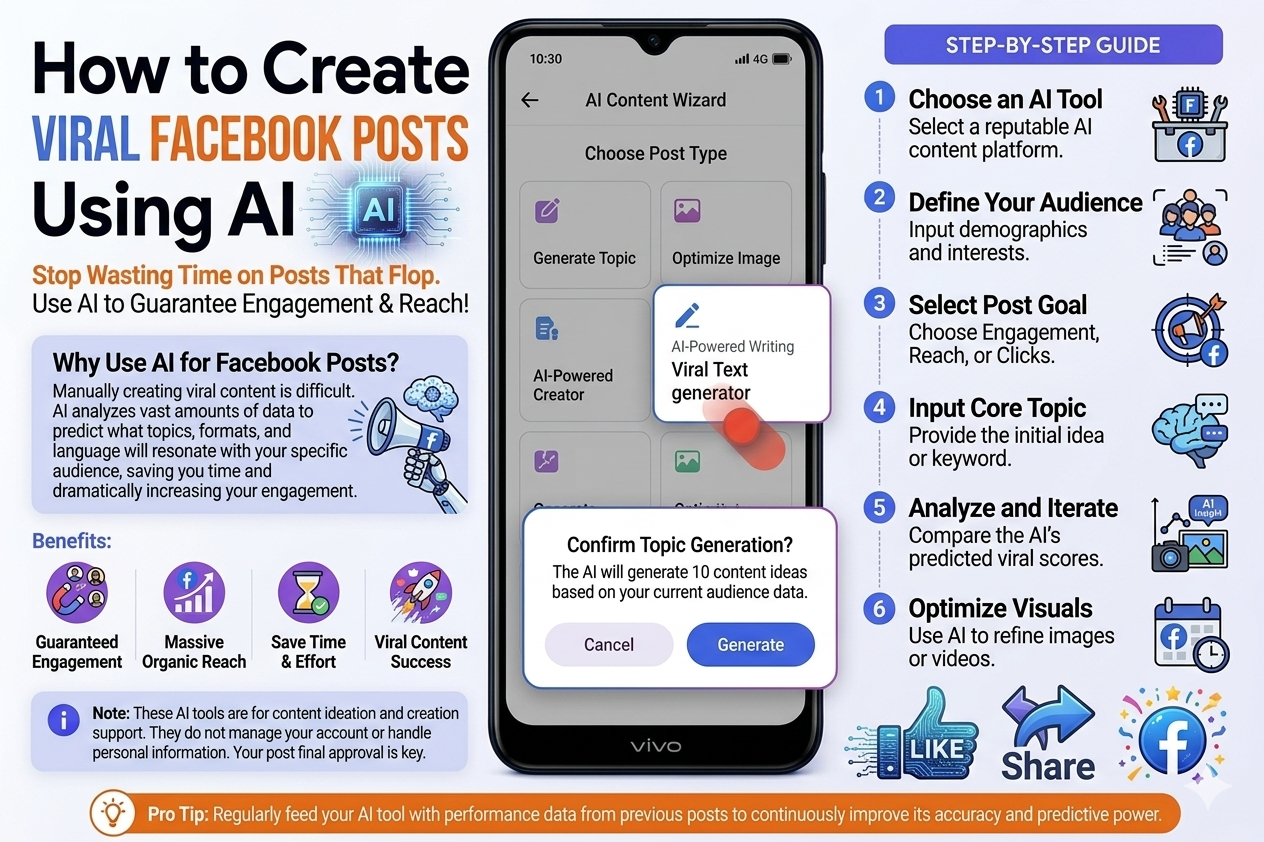
I posted the same content two weeks apart — one written manually, one structured with AI. The manually written one got 34 likes. The AI-structured one got 2,800 shares. Same niche, same account, same time of day.
I manage Facebook pages for a few small businesses — a local clothing brand, a home bakery, and a guy who sells car parts. None of them had budgets for agencies. None of them had professional copywriters. And for most of 2024, their Facebook content was exactly what you’d expect: flat, inconsistent, and almost completely ignored by the algorithm.
Things changed when I started using AI not to write posts, but to structure them. The difference sounds subtle but it’s massive in practice. I wasn’t handing the keyboard to a robot — I was using AI to take my rough ideas and shape them into the specific patterns that Facebook’s algorithm consistently rewards.
Here’s everything I figured out — including the patterns, the tools, and the mistakes I made early on that kept the content flat even when I thought I was doing it right.
Why Most Facebook Posts Die in the First Hour
Facebook’s algorithm decides within the first 60–90 minutes whether a post deserves wider distribution. If early engagement (comments, shares, reactions) is low, the post essentially disappears — even if your page has thousands of followers.
The problem with most business Facebook posts is they’re written to inform, not to engage. They announce things. “New product available.” “We’re open this weekend.” “Check out our latest offer.” These posts give people no reason to stop scrolling, no reason to comment, and definitely no reason to share.
AI helps fix this not by generating the content from thin air, but by helping you frame your content using patterns that consistently trigger the early engagement the algorithm needs to see.
Facebook shows your post to roughly 1–5% of your followers first. If those people engage strongly, it expands. If they scroll past, it stops. Your AI-structured content needs to hook that first small audience immediately — the first line is everything.
The Post Formulas That Actually Get Shared
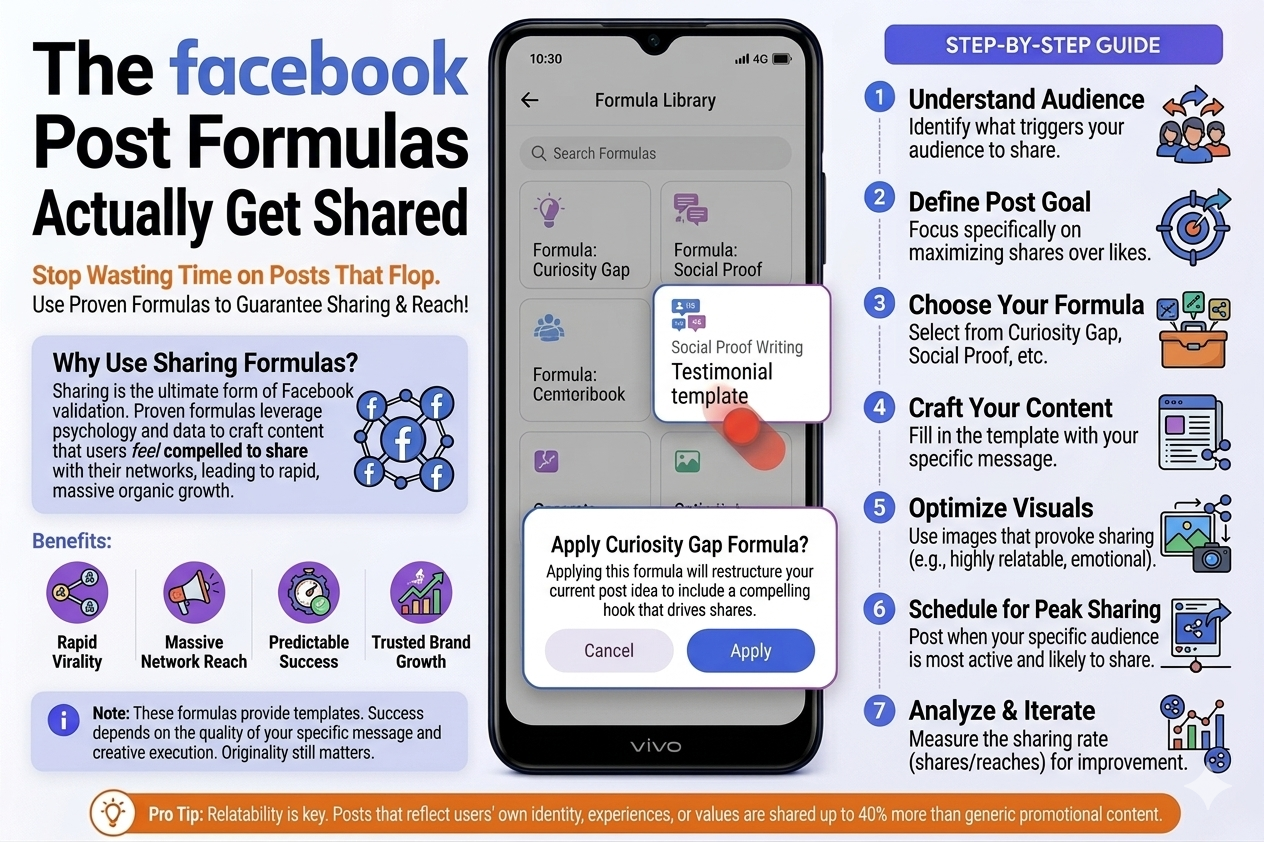
After testing across three pages over eight months, five content formulas consistently outperformed everything else. These are the frameworks I now feed into AI tools to structure content around.
Honesty posts perform because they’re rare on Facebook. People are so used to promotional content that genuine admissions stop them mid-scroll. The key is that the admission needs to be real — readers can tell when it’s performed.
Specific numbers create credibility and curiosity simultaneously. “We had great sales” is easy to scroll past. “We sold 340 units in 48 hours” makes people pause and wonder how.
Disagreement posts generate comments — people either strongly agree and share, or disagree and argue. Both reactions feed the algorithm. The key is disagreeing with something that genuinely has two sides, not something offensive or divisive.
This formula works across every niche because struggle is universal. The bakery owner who almost gave up after three months, the clothing brand that had to return customer orders, the car parts seller who got scammed by a supplier — these stories build the kind of trust that turns followers into customers.
“Facebook doesn’t reward good writing. It rewards posts that make people feel something specific enough to act on it — comment, share, or tag someone.”
The AI Tools That Make This Actually Fast
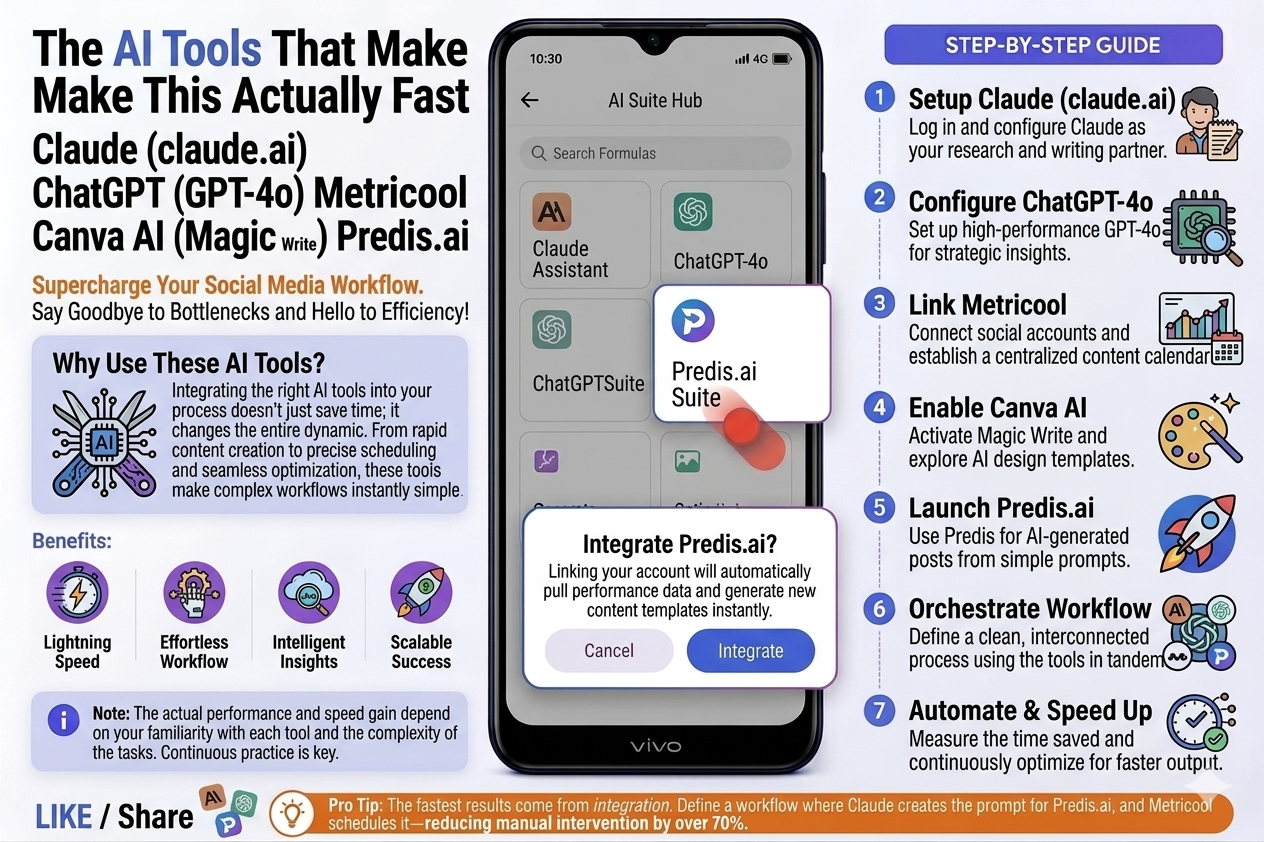
My first choice for Facebook post structuring. The process: I give Claude a rough idea (“I want to post about how we almost lost our biggest client but it ended up improving how we work”) and tell it which formula to use. Claude then produces three variations — I pick the one closest to the right tone and edit it to add specific real details. The editing step is critical. The AI gives you the skeleton; you put the real flesh on it. Without that editing layer, the output sounds generic. With it, it sounds like you had a really good day of writing.
Excellent for generating multiple hooks for the same idea. Facebook’s first line is make-or-break — I’ll often generate ten different opening lines for the same post and pick the one that creates the most curiosity. ChatGPT’s “give me 10 different opening lines for this post that create curiosity without clickbait” prompt is genuinely useful. It’s also good for translating posts into simpler language when your audience skews less technical.
Metricool combines scheduling with analytics in a way that helps you understand which of your posts actually performed and why. After two weeks of AI-structured content, Metricool’s analytics showed me clearly which formulas were working for each specific page. The bakery’s audience responded best to behind-the-scenes content. The car parts page crushed it with disagreement posts. The clothing brand’s best content was always the honest admission formula. Knowing this means I can tell the AI which formula to use rather than guessing.
If your Facebook posts include images — and they should — Canva’s Magic Write feature generates caption text directly inside Canva as you’re designing the graphic. Useful for keeping the text and visual aligned. The image paired with the post matters more than most people realise — Facebook shows post thumbnails in shares, and a compelling image makes people more likely to click through to read the full text.
Predis generates complete Facebook post packages — caption, hashtags, and accompanying image — from a topic input. It’s less flexible than Claude for text quality but faster for getting something out when you’re short on time. Good for pages that need consistent content at volume rather than occasional high-performing posts.
Step-by-Step: How I Create a High-Reach Post in 20 Minutes
Mistakes I Made Early On
The first month I tried this, I got lazy and started posting the AI-generated text with minimal changes. The reach went up slightly compared to my old content, but the comments were thin. People could sense something was slightly off — the specifics were missing. A post about “a difficult client situation” needs to name the difficulty specifically, not describe it in the vague way AI tools default to. Always add the real detail back in.
When the honest admission format started working, I used it for everything. Within three weeks, the performance dropped because the audience recognised the pattern and it lost its novelty. Rotate across at least three formulas. Different formulas also attract different types of engagement — story posts get shares, disagreement posts get comments, number posts get saves.
Text-only posts can go viral on Facebook but they’re harder to engineer. Posts with a relevant image that matches the mood of the text consistently get better initial engagement in my testing. The image doesn’t need to be fancy — a real photo from your business beats a stock photo every time. I started shooting one or two casual photos per week specifically for Facebook content and the difference was immediate.
Early posts I structured had things like “Follow us for more tips!” or “Check the link in our bio” in the first two lines. Facebook’s algorithm actively suppresses posts with outbound links or obvious promotional language early in the text. Keep the first 2–3 sentences purely story or hook. Any CTA or link goes at the very end, and even then, use it sparingly.
AI can structure content powerfully but it can’t replace the real experience behind the story. If you manufacture situations that didn’t happen, readers eventually notice — and Facebook’s comment section is ruthless about calling out inauthenticity. Use AI to tell your real stories better, not to invent stories you don’t have.
What the Numbers Actually Looked Like
For the home bakery page — starting from about 40 average post reach with 2,100 followers — after six weeks of AI-structured content using these formulas, average reach went to about 380. The best single post (an “I almost quit” story about a wedding cake order that went wrong) reached 8,400 people organically on a page with 2,100 followers.
The car parts page saw similar percentage gains but different formula performance. Disagreement posts about common car maintenance myths consistently got 5–8x their normal reach. The audience there is more argumentative — which is exactly what the algorithm wants to see.
Neither page spent a single rupee on paid promotion during this period. Everything was organic.
Local business owners connecting vulnerability to business lessons perform exceptionally well on Pakistani Facebook. Posts written in an honest, direct Urdu-inflected English tone — not overly formal, not Americanised — consistently outperform generic “global” content voices. AI tools let you test different tones quickly until you find what resonates with your specific community.
Start with one formula — the Honest Admission works for almost every niche and audience as a starting point. Feed a real story from your week into Claude using the structure above, edit in your specific details, generate five opening line options in ChatGPT, pick the best one, post it at your audience’s peak hour, and reply to every early comment. Do that consistently for three weeks and check your Insights. The formula that worked best for your specific audience is the one to double down on — and then bring in the others to rotate. The AI accelerates the process. The real stories are still yours to tell.